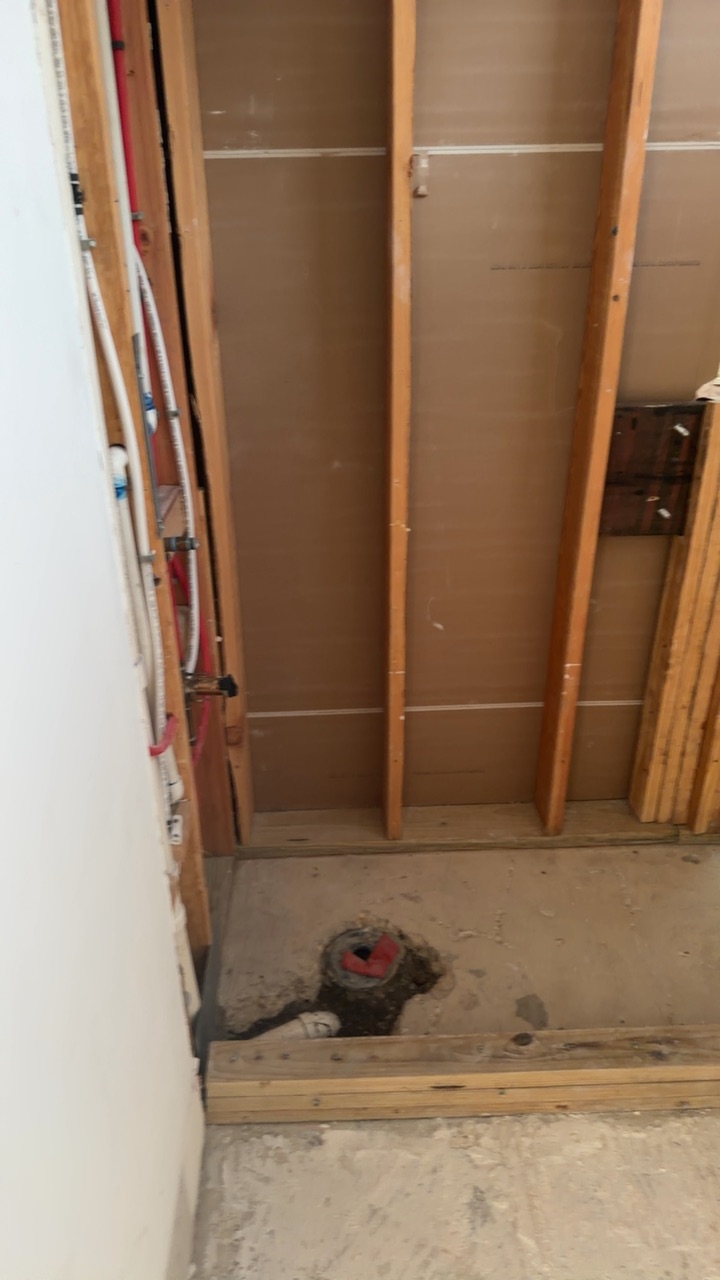
Water out of a North Texas tap runs hard enough to scale a water heater and spot a shower door within a week. The fix nearly everyone lands on is a water softener, installed in the garage, a utility closet, or a small alcove off the laundry. Almost nobody looks at it again. A pressurized appliance in a room nobody visits is why softener losses are some of the longest-running water damage jobs we see in DFW.
Why the Softener Is a Different Kind of Risk
A burst supply line announces itself. Water pours, somebody hears it, the main gets shut off. A softener rarely does that. It fails at a seal, a fitting, or a drain line, and it drips. It may drip a small amount every regeneration cycle, in the middle of the night, into a corner behind a salt tank. On a garage slab the water runs to the low point and evaporates before morning. In an interior closet it wicks into the bottom of the drywall and the sole plate and stays there.
By the time a homeowner notices anything, the leak is often weeks old, and what they notice is not water. It is a smell, a soft baseboard, or a buckled edge on the flooring in the adjacent hallway.
The Four Ways a Softener Actually Fails
- Inlet and outlet fittings. The bypass valve and the plumbing connections into the control head are the most common failure point. Plastic threads, years of pressure cycling, and a hot garage do the rest.
- The control head or rotor seal. When the internal seal wears, the unit can leak continuously to the drain or weep at the head during regeneration.
- The brine tank. A cracked tank or a stuck float lets the tank overfill and spill salt water across the floor.
- The drain line. A discharge hose that pops off the standpipe or an air gap that was never secured will empty an entire regeneration cycle onto the slab.
Reverse osmosis systems under a kitchen sink fail the same way, into a cabinet base that hides the evidence until it delaminates.
Brine Is Not Clean Water
This is the part homeowners and even some contractors get wrong. Water leaking from the inlet side of a softener, before it touches resin or salt, is clean water and starts as Category 1 under the IICRC S500 standard. Water coming out of the brine tank or the discharge line is a different animal. It carries salt, resin fines, and whatever has been sitting in the bottom of that tank, which puts it in Category 2 territory.
Salt also matters for a practical reason. It is hygroscopic, meaning it pulls moisture out of the air and holds it. Dry a slab or a sole plate that still has brine residue on it and the surface will read wet again days later, and the flooring installed on top of it can fail. Salt residue drives corrosion on fasteners and the bottom of metal door frames too.
So on a brine loss the sequence is not just dry it. Affected surfaces get cleaned and rinsed, disinfected where warranted, treated with an antimicrobial, and only then dried. Skipping the cleaning step is how a job comes back.

Signs Your Softener Is Leaking Right Now
- A white or chalky crust on the slab around the unit, or a ring at the base of the brine tank.
- Salt that has caked into a solid bridge inside the tank instead of loose pellets.
- The unit regenerating far more often than it should, or running constantly to the drain.
- A musty or metallic smell in the garage or laundry area, strongest low to the floor.
- Baseboard or door casing in the adjacent room that feels soft, or paint that has lifted along the bottom inch.
- Flooring in the neighboring hallway that has cupped, curled at the seams, or gone hollow underfoot.
- Rust staining on the bottom of a nearby water heater stand, appliance leg, or door frame.
What to Do the Moment You Find It
Put the softener on bypass first. Every unit has a bypass valve at the inlet, usually a lever or two knobs on the back of the control head. Bypass isolates the softener while leaving water on to the rest of the house, which beats shutting off the main. If the leak is upstream of the bypass, shut off the main instead.
Then document it before you clean it. Do not pull the salt tank out and mop the floor first. Photograph the unit, the wet area, the salt crust, and any affected walls or flooring in the rooms next door. On a long-running leak, photos of the scene before cleanup carry real weight with an adjuster.
Do not point a box fan at it either. Air movement across a contaminated wet surface pushes salt residue and whatever has grown on that sole plate into the rest of the house. Air movers belong in a drying plan, balanced against dehumidification, not run on their own.
How a Softener Loss Gets Dried Properly
The first job is mapping the water, not moving equipment. Thermal imaging finds the anomalies and moisture meters confirm what is actually wet in the drywall, the sole plate, and the slab. Softener water almost never stays in the room it started in. It runs under the wall into the adjacent hallway and travels under flooring that looks perfectly fine from above.
From there the work follows the water. Wet insulation comes out because it cannot be dried in place. Drywall gets a controlled flood cut above the wet line so the cavity and framing can dry. Contaminated surfaces get cleaned and treated before any equipment runs. Then air movers, LGR dehumidifiers, and a HEPA air scrubber where the air needs filtering go in, sized to the affected area rather than dropped by the truckload. Every affected material gets metered to dry standard against an unaffected reference area in the same home and documented daily until the readings hold.
The Insurance Question
Texas policies generally cover sudden and accidental discharge and generally exclude damage that seeped over weeks or months. A softener loss can land on either side of that line. A brine tank that split and dumped in an afternoon reads very differently from a rotor seal that wept since spring. Do not talk yourself out of filing. Document the failure point, get a professional assessment of what is wet and how far it traveled, and let the adjuster decide with real information in front of them.
Worth Checking This Weekend
Pull the lid off the brine tank, look for a salt bridge, and run your hand along the slab behind the unit. Check the drain line is still seated in the standpipe. Look at the bottom two inches of the wall on the other side of that closet. Five minutes now beats a flood cut later.
Flood Titan Restoration is owner-operated out of Southlake, Certified and Insured, and IICRC certified, and we handle softener and appliance losses across the metroplex including Keller and Colleyville. More on how we approach these losses is on our water damage restoration page. If you found something behind your softener and you are not sure how far it went, call 817-95-FLOOD or email info@floodtitan.com and we will come look at it.
Found Water Behind Your Softener?
Flood Titan Restoration is on call 24/7 across the DFW Metroplex. Owner-operated in Southlake, IICRC Certified Firm, insurance-aligned documentation from day one.
Call 817-95-FLOOD