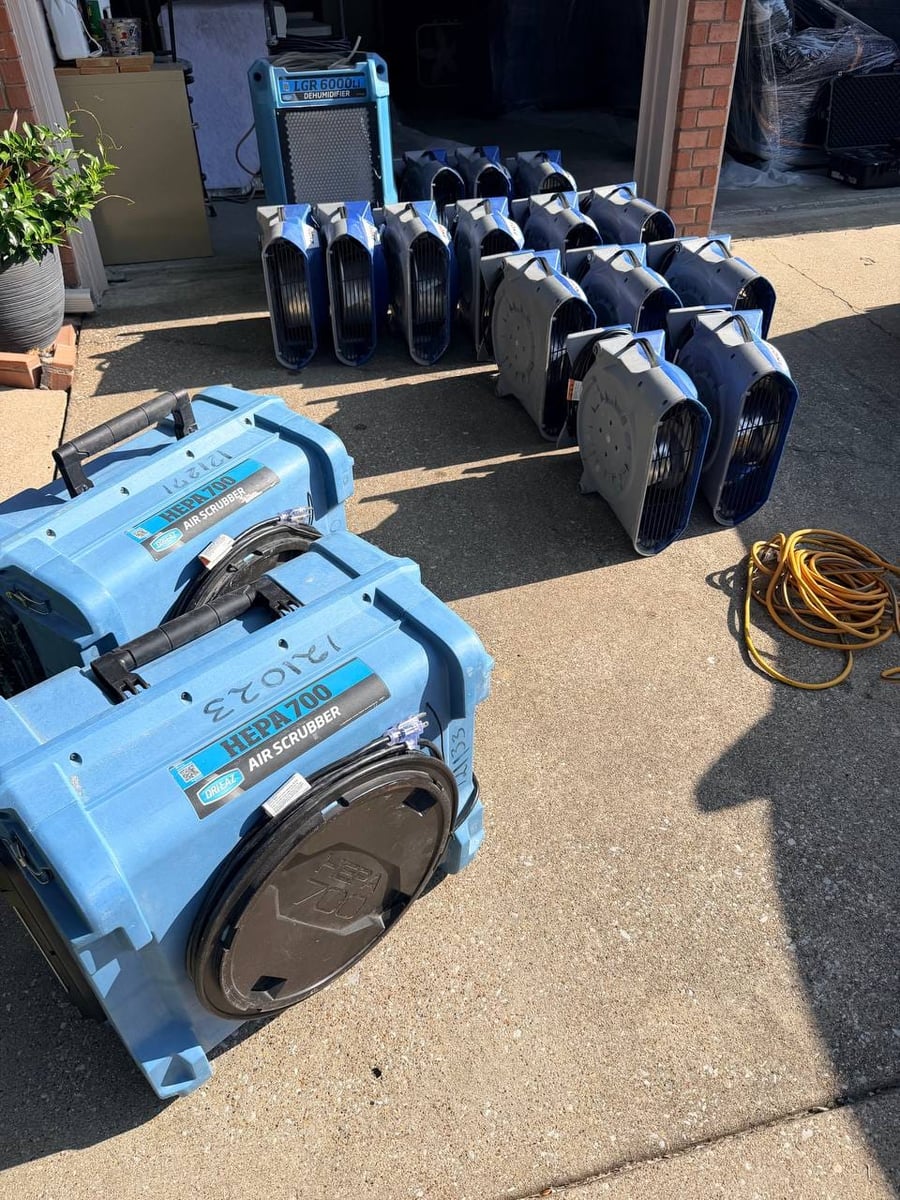
Winter in North Texas is when two problems tend to show up together. A hard freeze bursts pipes, and the same weather brings ice on power lines. Anyone who remembers February 2021 knows how fast that combination spreads across the metroplex. Even without a storm, a house full of drying equipment puts real load on its circuits, and a tripped breaker is one of the most common calls we get during a dry-out. Neither one has to ruin the job, as long as you know what is happening and what to do.
What Stops When the Power Goes Out
Structural drying works because three things happen at once. Air movers push air across wet surfaces so moisture evaporates. Dehumidifiers pull that moisture out of the air so it does not settle back into the drywall, flooring, and framing. On some jobs, HEPA air scrubbers filter the air and help control airflow through containment.
When the power drops, all three stop together. Drying does not reverse right away. Wet materials do not suddenly get wetter. But evaporation slows to a crawl, and the moisture that was already in the air has nowhere to go. Indoor humidity climbs, and the wet materials just sit there.
A few hours of downtime usually costs a few hours on the schedule. A day or more is different. The longer materials stay wet, the higher the risk of secondary damage: swelling and cupping in wood floors, delamination in cabinets, and the conditions that let microbial growth get started. That is why we treat an outage as something to manage, not just wait out.
What to Do During an Outage
- Stay away from wet areas near cords and outlets. When power comes back, it comes back to everything plugged in. If there is standing water anywhere near the equipment or the cords, do not touch them.
- Leave the equipment where it is. Our techs place each air mover and dehumidifier for a reason. Moving them around in the dark usually makes the restart less effective.
- Keep doors and windows closed. In a cold, damp ice storm, outside air does not help you dry. Keep the drying area closed up so the dehumidifier is not fighting outdoor moisture once it restarts.
- Never run a generator inside. That includes the garage, even with the door open. Carbon monoxide is a far bigger danger than a delay in drying.
- Call us and tell us how long you have been out. We track every job day by day, and knowing the length of the gap tells us how to adjust the plan.
When Power Comes Back
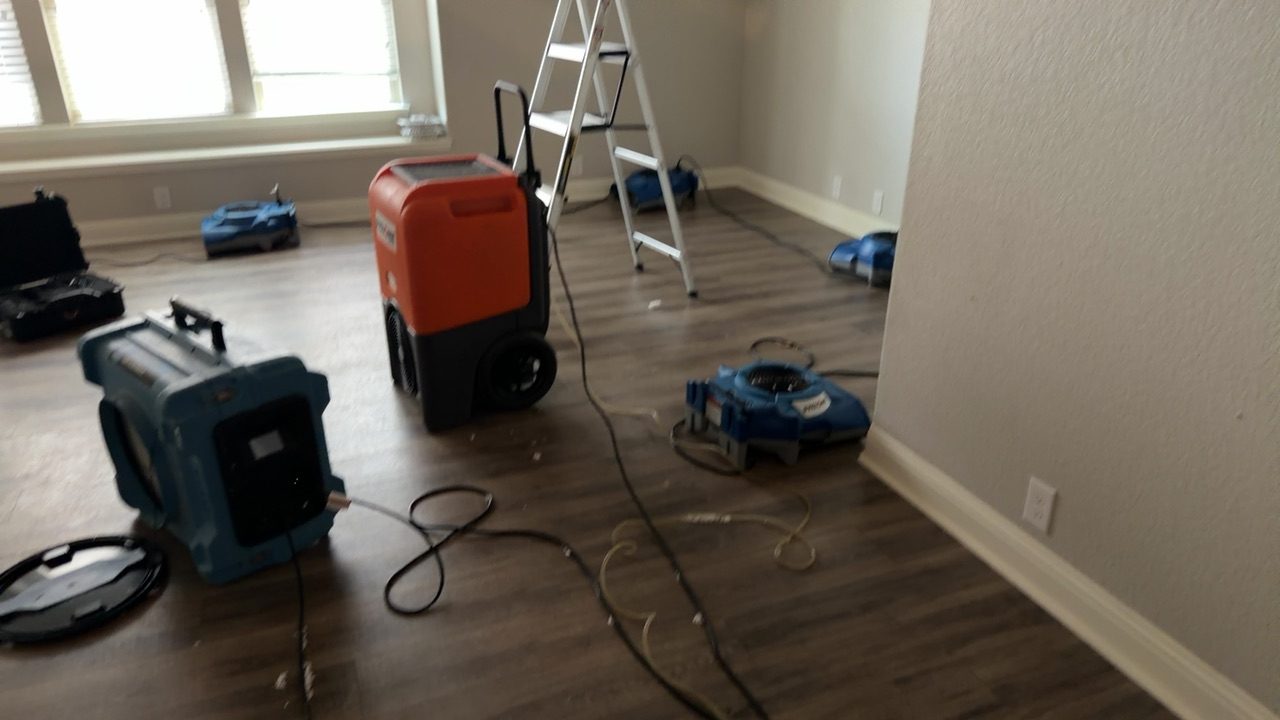
Many drying units start back up on their own once power is restored, but not every unit does. Some dehumidifiers need a button pressed to restart, and a unit that lost power mid-cycle may sit idle until someone checks it. When the lights come back on, walk the rooms and make sure you hear every air mover and see the dehumidifier running. If something is silent, give us a call rather than unplugging and replugging units yourself.
After any outage longer than a few hours, we come out and take a fresh set of readings. We compare them to the last visit to see how much ground was lost, then adjust equipment if needed. The goal does not change. We still meter to dry standard before any wall is closed up or any floor goes back down. The outage just changes how long it takes to get there.
The Other Kind of Outage: Tripped Breakers
You do not need a storm to lose power to the drying equipment. Dehumidifiers and air movers draw a lot of current, and many homes in Southlake, Trophy Club, and across the metroplex were not wired with a dozen machines in mind. When we set up, we spread the load across different circuits on purpose. Even so, a breaker can trip when the homeowner adds a space heater, a hair dryer, or a microwave to the same circuit.
If a breaker trips, reset it once. If it trips again, leave it off and call us. A breaker that keeps tripping is telling you that circuit is overloaded or that something on it has a problem, and repeated resets are not safe. We can rearrange the equipment so it runs on circuits that can handle it.
The same goes for unplugging equipment because of noise or heat. We understand the machines are loud. If they are keeping you up, call us before you shut anything off so we can adjust the setup instead of losing a night of drying.
Will Insurance Pay for the Extra Days?
Policies differ, so we never promise what a carrier will pay. What we can do is make the record clear. Our daily moisture readings and notes show when the equipment was running, when the outage happened, and how long it took to recover. When an adjuster sees that drying slowed because of a documented storm outage, not because of poor setup, the extra days are much easier to explain.
Drying Interrupted? Call Us
If an ice storm, a tripped breaker, or anything else has shut off the drying equipment in your home, call Flood Titan at 817-95-FLOOD or email info@floodtitan.com. We are owner-operated, IICRC certified, and on call 24/7 across DFW, including holidays and storm weeks. Learn more about our water damage restoration process, or see how we serve homeowners in Southlake and Trophy Club.
Equipment Stopped Running?
Flood Titan Restoration is on call 24/7 across the entire DFW Metroplex. IICRC Certified Firm, owner-operated in Southlake, insurance-aligned billing.
Call 817-95-FLOOD