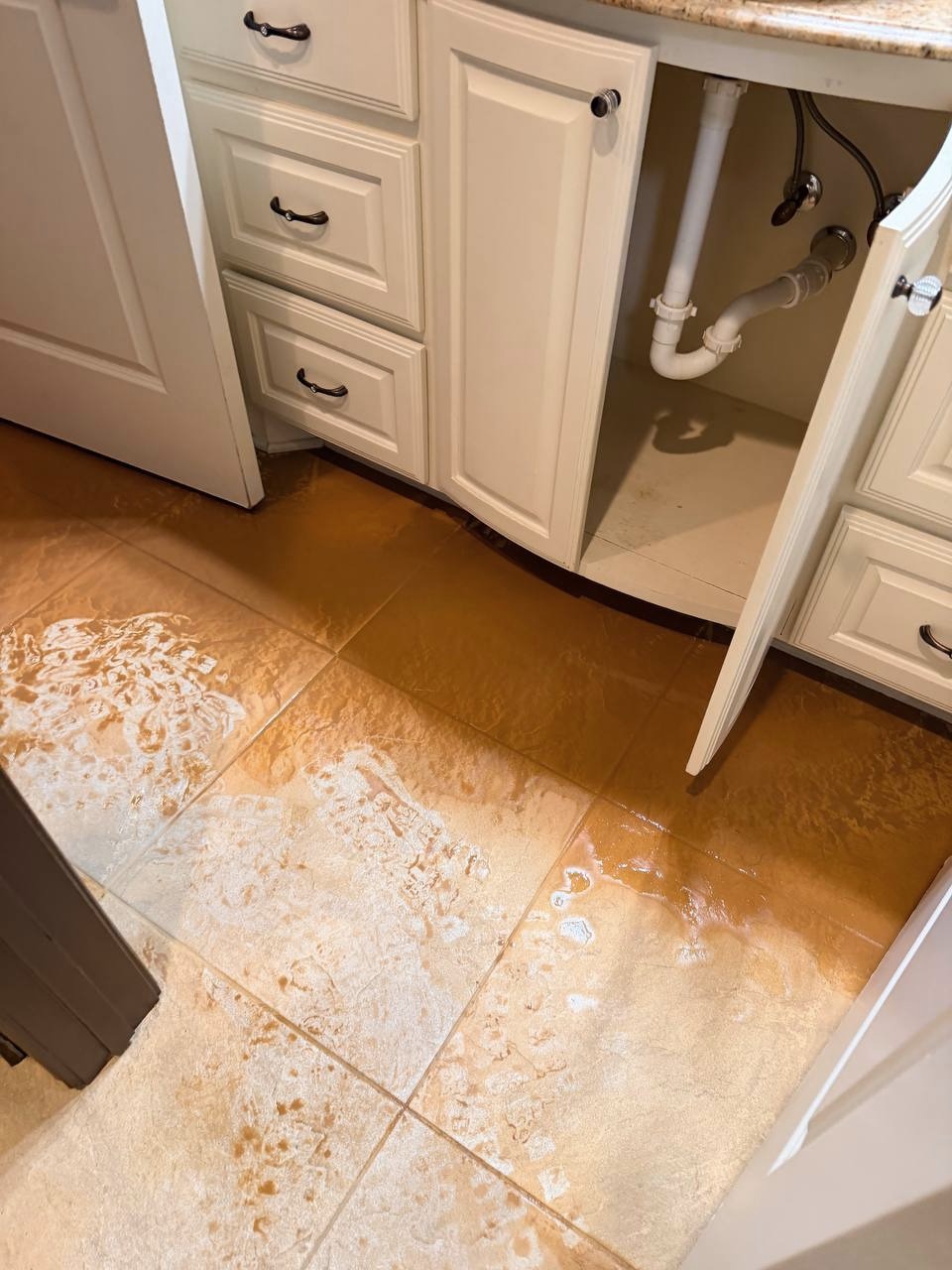
Every year between Thanksgiving and New Year's, we get a predictable run of calls across the metroplex. The story is almost always the same. The guest bathroom was fine the last time anyone used it, which was months ago. Now the house is full, the shower has run six times since breakfast, and there is water on the floor, a stain on the ceiling below, or a soft spot next to the toilet. The room did not suddenly break. It was waiting for a load it had not seen all year.
Why Idle Bathrooms Fail Under a Holiday Load
Plumbing that sits unused does not stay the same. Rubber and wax components dry out, mineral scale builds on valve parts, and small weaknesses that would have shown up gradually with daily use stay hidden. Then the holidays compress a year of wear into a week.
- Dried-out seals. Toilet flappers, tank-to-bowl gaskets, and faucet cartridges shrink and harden when they sit dry. The first heavy use can push water past them.
- Back-to-back showers. A shower pan or grout line with a hairline crack might survive one short shower. Five long ones in a morning keep the pan saturated long enough to wick water into the subfloor or slab edge.
- Clogs plus guests. A slow drain nobody noticed becomes a full overflow when a visitor does not know which way the toilet handle sticks or walks away from a running tub.
- Supply lines nobody looks at. Braided toilet and faucet supply lines have a service life. A guest bath line installed when the house was built may be well past it.
DFW adds its own twist. Our clay soils shift through the dry summer and the first cool, wet weeks of fall, and that movement can stress rigid drain connections and grout in slab homes. A bathroom that settled a little since spring is more likely to leak under heavy use.
The Upstairs Guest Bath Problem

In a lot of two-story homes in Flower Mound, Colleyville, and Keller, the guest suite sits upstairs, often over the living room or kitchen. That changes everything about a leak. Water that escapes a toilet base or shower pan upstairs does not pool where you can see it. It soaks the subfloor, runs along the joists, and shows up as a ceiling stain one floor down, sometimes a room or two away from the source.
By the time a stain appears below, the subfloor, insulation, and drywall in the cavity have usually been wet for a while. That is why an upstairs guest bath leak almost always needs a professional assessment instead of a towel and a fan. If the ceiling below is bowing or sagging, keep people out from under it.
A 15-Minute Check Before Guests Arrive
You can catch most of these problems with a quick walk-through a few days before company shows up. Run the bathroom the way a houseguest would and watch closely.
- Flush the toilet several times. Watch the base for any seep and listen for the tank refilling on its own afterward, which points to a worn flapper.
- Rock the toilet gently. Any movement suggests a failing wax ring, and a soft or spongy floor around the base is a sign water may already be in the subfloor.
- Run the shower for ten minutes. Then check the grout, the caulk line where the pan meets the wall, and the ceiling below if the bath is upstairs.
- Look under the vanity with a flashlight. Check the supply lines, the shutoff valves, and the drain trap for drips, mineral crust, or swelling at the cabinet floor.
- Exercise the shutoff valves. Turn them off and back on. A valve frozen open does you no good at 11 p.m. on Christmas Eve.
- Leave a leak sensor. A battery water alarm behind the toilet or under the sink gives you early warning while the house is busy.
Also show your guests where the toilet shutoff is. Most people have never looked, and ten seconds of instruction can turn a flood into a wet towel.
What to Do If It Leaks Mid-Visit
Close the fixture shutoff, or the main if you cannot stop it locally. Turn off power to any outlets or lights near standing water. Photograph the floor, the fixture, and any ceiling below before you start cleanup, because your adjuster will want to see the loss as it was. Move rugs, towels, and luggage out of the wet area.
Then call a restoration team quickly, even though the house is full. Water from a toilet overflow is often contaminated, and the IICRC S500 standard treats that water differently from a clean supply line leak. The longer it sits in subfloor and drywall, the more material has to come out. Holiday schedules are exactly when people wait, and waiting is what turns a short drying job into tearout and rebuild.
How We Dry a Bathroom Leak
When our crew arrives, we start by finding where the water actually went. We use moisture meters and thermal imaging to map the wet area across the tile, under the vanity, into the wall cavities, and through the ceiling below. Bathroom leaks spread farther than they look, so the drying plan is built on readings, not on the puddle.
From there we set air movers to push air across wet surfaces and dehumidifiers to pull that moisture out of the room. When the leak involves contaminated water, we contain the area, use air scrubbers to control airborne particles, and apply antimicrobial treatment to affected materials. Where a ceiling or toe kick has to be opened to reach a wet cavity, we make controlled cuts and keep them as small as the readings allow. We monitor every day and meter to dry standard, and we document each reading for your insurance file. Most homeowners can keep hosting while the drying runs, and we work around your household to keep the disruption down.
Keep the Holidays About Family
A guest bathroom leak is one of the most common water losses we see this time of year, and one of the most preventable. Spend fifteen minutes testing the room before company arrives, keep the shutoff valves working, and act fast if something does let go. If you find water on the floor or a stain on the ceiling below, call Flood Titan at 817-95-FLOOD or email info@floodtitan.com. We are owner-operated, IICRC certified, and on call 24/7 across the metroplex, holidays included. Learn more about our water damage restoration process, or see how we serve homeowners in Flower Mound and Colleyville.
Water on the Guest Bath Floor?
Flood Titan Restoration is on call 24/7 across the entire DFW Metroplex, holidays included. IICRC Certified Firm, owner-operated in Southlake, insurance-aligned billing.
Call 817-95-FLOOD