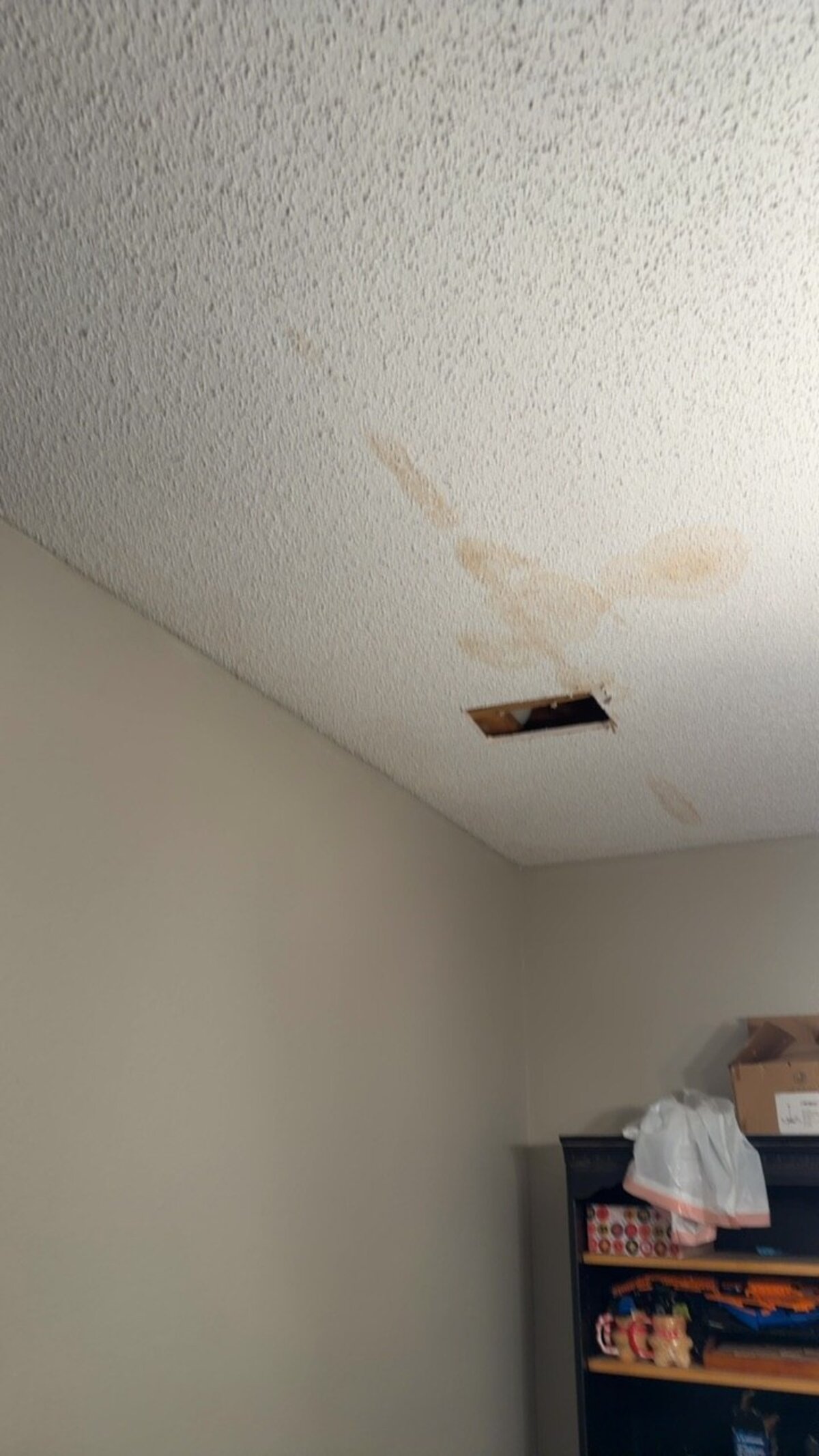
Ceiling stains are one of the most common reasons homeowners across the metroplex call us, and one of the most misread. Some people panic over a stain that has been dry since the last roof replacement. Others paint over a spot that is quietly growing because the source never stopped. The stain itself is just a record of where water dried and left minerals behind. To know what it means, you have to look at what is happening behind it.
What a Water Stain Actually Is
When water soaks into drywall and then evaporates, it leaves behind dissolved minerals, dust, and tannins it picked up on the way down through wood framing, insulation, or roof decking. That residue is the brown or yellow ring you see. It forms whether the water came once or keeps coming, which is why color alone is a poor guide.
A few patterns are worth knowing, though:
- Multiple rings, like tree rings, usually mean the area has gotten wet and dried more than once. That points to a recurring source such as a roof leak that acts up in every storm or a condensate line that overflows when the system runs hard.
- A sharp, crisp edge often means the stain dried completely some time ago.
- A soft, darker center that fades outward can mean the middle is still damp.
- Trails or streaks, like the ones in the photo above, suggest water traveling along a joist or seam before it soaked through, so the source may not be directly above the stain.
None of those is proof. They are clues that tell you where to look next.
Signs the Leak Is Still Active
Some signs make it fairly clear the problem is not in the past. If you notice any of these, treat the stain as active until someone proves otherwise:
- The stain is getting bigger. Trace the edge lightly in pencil and check it again in a few days, and again after the next rain if the stain sits below the roof or attic.
- The drywall feels soft, cool, or damp when you press it gently with the back of your hand.
- The ceiling is bubbling, peeling, or sagging. A bowed ceiling can be holding water. Keep people and pets out from under it and do not poke it.
- You notice a musty smell in that room that was not there before.
- It lines up with a water source. A stain directly under an upstairs bathroom, a laundry room, or an attic air handler deserves extra suspicion.
- The timing matches something. If it appeared after a storm, after the heat came on for the season, or after a full house of holiday guests, that is a strong hint about the source.
In DFW, timing is especially useful. Spring and fall storms drive roof and flashing leaks. Summer brings attic condensate overflows from air handlers running nonstop. The first hard cold snap brings attic pipe bursts. Matching the stain to the season narrows the search fast.
Why You Cannot Judge It From the Floor
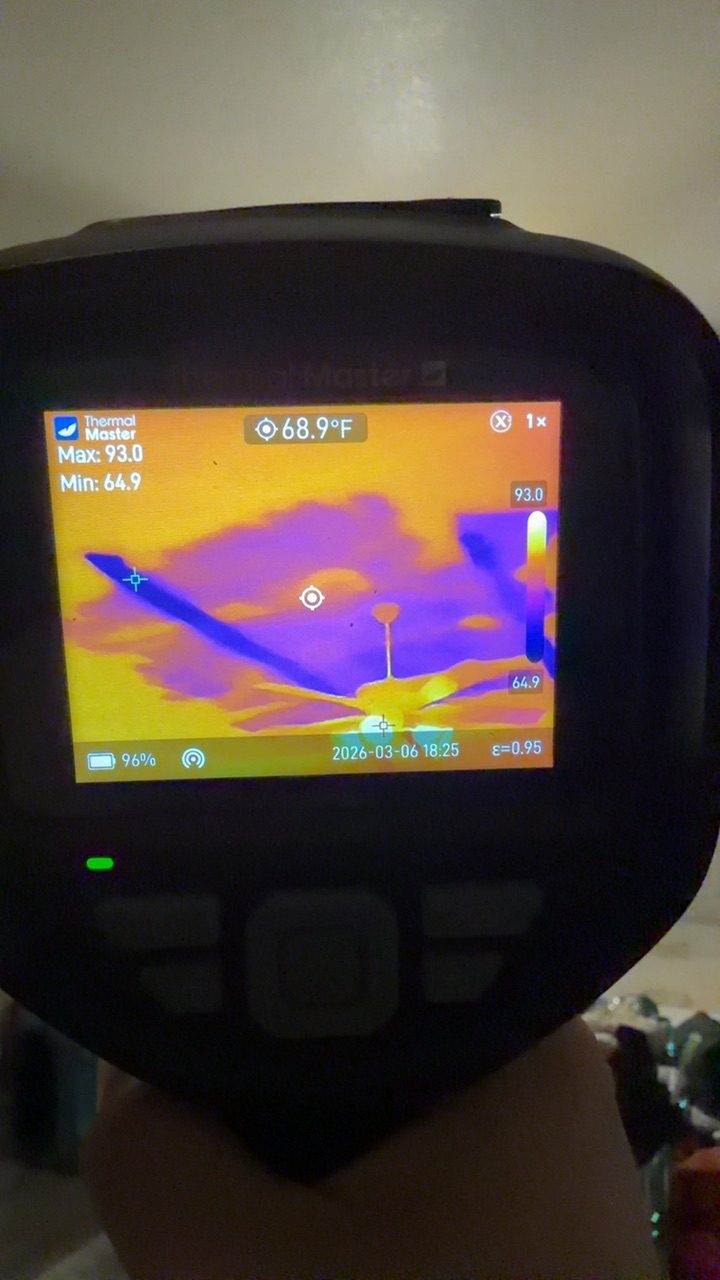
The visible stain is almost always smaller than the wet area. Water spreads across the top of the drywall, soaks into insulation, and wicks along framing before it ever shows on the painted side. A stain the size of a dinner plate can sit under a wet area several feet across.
That is where professional tools come in. A thermal imaging camera shows temperature differences across the ceiling, and damp drywall usually reads cooler because moisture is evaporating from it. A thermal image alone is not a moisture reading, though. Cold air from a supply vent or a gap in attic insulation can look similar. So every suspicious spot gets checked with a moisture meter, and the readings are compared against a dry area of the same ceiling. That comparison is what separates an old, dry stain from an active one.
In older homes in places like Grapevine and Keller, we also look at the attic side when it is safe to do so: stained decking, rusted nail tips, a damp drain pan under the air handler, or wet insulation. The attic often tells the story the ceiling cannot.
When It Is Safe to Just Paint
If the source was repaired, the ceiling meters dry when compared to unaffected areas, and the drywall is firm with no sag, an old stain is usually cosmetic. Seal it with a stain-blocking primer before painting, or it will bleed right back through regular ceiling paint.
Do not paint over a stain you have not confirmed is dry. Paint hides the warning sign while water keeps working on the drywall, insulation, and framing above. It also makes the history harder to document if you need to file an insurance claim later. Many policies treat sudden damage differently from long-term seepage, and a painted-over stain that kept growing can complicate that conversation.
What We Do When the Stain Is Active
If readings confirm the ceiling is wet, the first job is finding and stopping the source, whether that means a roofer, a plumber, or an HVAC tech. Then we map the full wet area with moisture meters and thermal imaging so the drying plan covers what is actually wet, not just what is stained.
Wet insulation over a ceiling generally does not dry well in place, so it is usually removed. If the drywall is saturated or sagging, we make a controlled opening so air can reach the joists and the cavity. From there we set air movers and dehumidifiers, monitor every day, and meter to dry standard before anything is closed back up. Every reading goes into your file, which gives your adjuster a clear record of what was wet and when it was dry.
Not Sure? Get It Checked
A ceiling stain is a question, not an answer. If it is growing, soft, sagging, or sitting under a bathroom or air handler, assume it is active and have it checked. Call Flood Titan at 817-95-FLOOD or email info@floodtitan.com. We are owner-operated, IICRC certified, and on call 24/7 across the metroplex. Learn more about our water damage restoration process, or see how we serve homeowners in Grapevine and Keller.
New Stain on the Ceiling?
Flood Titan Restoration is on call 24/7 across the entire DFW Metroplex. IICRC Certified Firm, owner-operated in Southlake, insurance-aligned billing.
Call 817-95-FLOOD